


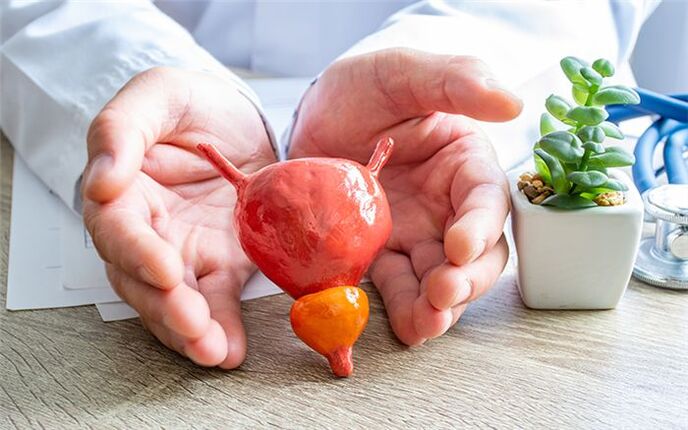
Prostatitis in men is an inflammatory process involving prostate tissue.The disease is accompanied by pain in the lower back, perineum and pelvis.The main manifestations are pain in the perineum and dysfunction of the lower urinary tract.
Of all urological diseases, prostatitis is most often encountered by urologists.It can develop unexpectedly (acutely) against the background of general health, or it can last for a long time, with periods of exacerbation and remission, which indicates a chronic course.Moreover, the second variant of the disease is diagnosed much more often.
The disease can be independent, or it can be combined with prostate hyperplasia or prostate cancer.
Reasons for development
Inflammation does not occur on its own.The causes of prostatitis can be divided into bacterial and non-bacterial.
The acute infectious variant most often occurs in men under the age of 35 due to damage to the prostate by gram-negative bacteria - Escherichia coli, Proteus, Enterobacter.Inflammation also occurs due to infection with sexually transmitted infections - gonorrhea, chlamydia.In the chronic form, there can be many more reasons, and the list will include atypical microbes.
The provoking factors for the development of the bacterial variant are:
- unprotected sexual intercourse;
- AIDS or HIV infection;
- diarrhea or constipation;
- anal intercourse;
- sedentary lifestyle;
- inactive sex life;
- diabetes mellitus;
- hypothermia;
- violations of intimate hygiene.
- emotional disorders;
- autoimmune diseases;
- increased physical activity;
- lack of regular sex life;
- work involving heavy lifting;
- chronic stress;
- congestion in prostate tissues;
- previously confirmed fibrotic changes in the prostate (according to TRUS results).
What are the first signs of prostatitis that you must pay attention to?
The first manifestations of the disease are pain in the lower back and perineum, difficulty urinating.If, when going to the toilet, you notice a weakening of the urine, or if you feel discomfort or a burning sensation in the urethra, you should contact a urologist as soon as possible.
With the acute onset of the disease, there may be a rise in temperature and deterioration of general health.Such a patient should be treated immediately with antibiotics and anti-inflammatory drugs.
In some cases, the disease can be asymptomatic for a long time, so treatment is started late.
Symptoms of prostatitis
Signs of prostatitis in men depend on the form of the disease.In the acute form, the following manifestations are characteristic:
- pain in the lower back, sacrum, perineum;
- frequent or difficult urination;
- acute retention of urine;
- defecation difficulties;
- thin stream of urine;
- increase in temperature;
- chills;
- deterioration of general health.
The chronic form can arise after the acute phase of the disease or develop as a primary disease.Symptoms of chronic prostatitis in men are mild.The pain is of low intensity, the temperature may rise slightly.The stream of urine becomes thin, disorders appear in the intimate area.
In the chronic course, exacerbation of prostatitis with symptoms characteristic of the acute phase is possible.Pain can be absent or dull, painful in nature.
Symptoms of acute prostatitis
Acute prostatitis occurs in several stages, which will pass from one to another if you do not consult a specialist and stop the development of the disease in time.
The first stage is called acute catarrhal prostatitis.It starts with complaints of frequent painful urination.In the lower back and sacrum, as well as in the perineum, there is a slight pain at first, which quickly increases.
Without treatment, the second stage occurs - acute follicular.At this moment, the pain becomes particularly intense, radiates to the anus, and intensifies during bowel movements.Urination is very difficult, sometimes there is acute retention of urine.The temperature does not exceed 38 degrees and only in rare cases can it be higher.
Acute parenchymal prostatitis is expressed in severe intoxication, the temperature reaches 38 ° C and more, and chills appear.Urinary retention is often observed, sharp, throbbing pain in the perineum appears, and defecation is difficult.
Symptoms of chronic prostatitis
Sometimes chronic prostatitis occurs against the background of an acute inflammatory process.This is a separate disease in which there is a primary chronic course that develops over a long period of time.
Often, the chronic course begins as a complication of the inflammatory process caused by various infectious agents - chlamydia, trichomonas, gonococcus.But vivid manifestations are very rare;more often, the disease occurs with minor pain during urination or in the perineum, and mild discharge from the urethra.Often these manifestations remain unnoticed even by the patient for a very long time.
Signs of prostatitis in men can appear in different ways, but they are all grouped into three groups - pain, urination disorder, problems with sexual activity.Prostate tissue lacks receptors and therefore cannot cause painful sensations.They appear when the inflammation starts to spread to the pelvic organs, which are richly innervated.Pain in patients can vary from barely noticeable discomfort to severe and intense pain that disrupts sleep and normal lifestyle.Pain can radiate to the sacrum, scrotum, lower back, perineum, so self-diagnosis is useless here.
Problems with urination begin at the moment when the prostate increases in volume and begins to compress the urethra with a decrease in the lumen of the ureter.There is a frequent urge to urinate, a feeling of incomplete emptying of the bladder.Usually, such phenomena are expressed at the very beginning of the disease, in its early stages, then they are compensated by the body, but in a later stage, without adequate treatment, they reappear.
Problems with potency in men can also be expressed in different ways.Patients complain of worsening erection, accelerated ejaculation and reduced sexual arousal.Gradually, sexual dysfunctions become more and more pronounced, and in the advanced stage the symptoms of prostatitis are supplemented by impotence.
Classification
Experts distinguish several categories of diseases:
- Acute bacterial prostatitis, characterized by symptoms of bacterial infection.The causative agent of the disease in most cases is Escherichia coli.Enterococci and other bacteria are isolated somewhat less often;
- chronic bacterial prostatitis, which is a recurrent form of the disease.The causative agents of the disease are bacteria E. coli, enterococci, etc.The causative agents can also be trichomonads, fungi, chlamydia, viruses, mycoplasmas;
- chronic pelvic pain syndrome, in which infections are not detected.There are two types: inflammatory and non-inflammatory.Among the causes: autoimmune processes, external factors (hypothermia, overheating), infrequent sexual life, low physical activity, infrequent urination;
- Asymptomatic prostatitis, discovered accidentally during a doctor's examination.
Only a qualified specialist can accurately name the type of prostatitis and determine the course of treatment after detailed diagnosis based on examination data.You should consult a specialist if you have certain symptoms.
Symptoms
The main symptom is urinary system dysfunction.Consult a specialist if you have the following symptoms:
- if urination is difficult and urine flows intermittently;
- if there is discharge from the urethra during bowel movements;
- with a burning sensation in the urethra and perineum;
- if discomfort occurs in the bladder and prostate during bowel movements;
- if the urge to urinate increases and becomes more frequent;
- if you feel pain in the rectum;
- if there is purulent bloody discharge from the urethra (floating "threads");
- with frequent rise in body temperature;
- when intimate problems appear (weakening of erection);
- when erections appear at night for an inexplicable reason;
- if ejaculation during sexual intercourse is too fast;
- if sensations during orgasm are "deleted";
- with rapid general fatigue;
- with manifestations of an unreasonably anxious or depressed state, as well as a state of mental depression;
- with frequent depressions, manifestations of mental depression in anticipation of complications;
- with general weakening of the organism.
One or two symptoms are enough to contact a urologist.Attempts at self-healing usually lead to worsening of the condition and chronic or severe illness.In the worst case, not seeing a doctor on time can cause infertility or complete impotence.

If the patient does not consult a doctor in time or neglects treatment, the following symptoms may appear:
- pain in the perineum;
- pain near the scrotum;
- pain at the base of the root of the penis (of a painful nature).
Aching pain indicates the formation of stones.Doctors call infertility a late sign of a progressive disease.
Signs of prostatitis in acute and chronic forms vary significantly.Especially, in the chronic form, the signs can be mild or not expressed at all.
Acute prostatitis is characterized by pronounced symptoms - general weakness, pain in the groin area.Men should contact a specialist if:
- the urge to urinate has become very frequent;
- pain during defecation and urination intensifies in the perineum and radiates to the groin;
- complete emptying of the bladder is impossible;
- the amount of urine produced per day has significantly decreased or urine is not collected;
- fever, frequent headaches, general weakness.
Acute bacterial prostatitis is characterized by fever and chills, pain in the lumbosacral region (severe), pain manifested in the perineum and rectum, acute retention of urine, frequent pains in muscles and joints.
Chronic prostatitis is characterized by the following symptoms:
- during urination, the pain in the perineum intensifies;
- with frequent urges, the bladder does not empty completely;
- decreased sex drive;
- discomfort is felt during sexual intercourse.
One of the signs of the chronic form is significant disturbances of the emotional background, which are characterized by insomnia, increased nervousness, moodiness and irritability.
The bacterial form of chronic prostatitis is characterized by problems with ejaculation, which becomes rapid and painful, discomfort in the pubic area, frequent or involuntary urination and intermittent flow of urine.
Chronic pelvic pain syndrome, which, according to medical statistics, is the most common form of prostatitis, is characterized by symptoms similar to those of bacterial prostatitis in its chronic form: frequent urge to urinate, weakening of urine, pain in the penis and testicles, and sexual dysfunction.
Possible complications
- vesiculitis;
- posterior urethritis or colliculitis;
- abscess of the gland itself;
- sclerosis or fibrosis of the prostate;
- prostate cysts and stones;
- infertility;
- ejaculation disorder;
- erectile dysfunction.
Diagnostics
Diagnosis and treatment of any form of prostatitis is carried out by a urologist.If a tumor is suspected, the patient can be referred to an oncologist.In the case of long-term chronic prostatitis, which is difficult to treat, a consultation with an immunologist may be necessary.
- Bacteriological culture of urine.
- Analysis of prostate secretion for microflora and sensitivity to antibiotics.
- Rectal examination of the prostate.
- Ultrasound of the prostate, which allows you to identify tumors, cysts, adenomas, and also distinguish prostatitis from other urological and surgical diseases.
- Spermogram to rule out infertility.
Characteristics of diagnosis of acute prostatitis
If the signs of the disease indicate acute prostatitis, the diagnosis is made based on instrumental and clinical examination data.All manipulations that can affect the prostate are contraindicated, because they can cause acute pain or cause the spread of infection.
Features of the diagnosis of chronic bacterial prostatitis
In such cases, the diagnosis is based on the following data: examination by the patient's doctor, bacteriological and microscopic examination of prostate secretions, study of ultrasound data.
Characteristics of pelvic pain syndrome diagnosis
Specialists prescribe diagnostic procedures for symptoms that indicate chronic pelvic pain syndrome, taking into account the type of disease: inflammatory or non-inflammatory.As a rule, ultrasound is prescribed, as well as the following manipulations:
- examination of prostate secretions;
- molecular biological research;
- bacteriological research.
The choice of technique is determined by the doctor based on the data of the initial examination.
Risk groups
The most likely occurrence and development of prostatitis:
- in men who are obese or lead a sedentary lifestyle;
- in men with sedentary work (office workers, programmers);
- in men whose body is subject to tremors and vibrations (drivers of cars, including special equipment);
- in men who had infectious diseases, including diseases of the genitourinary system;
- in men who are sexually hyperactive and in those who do not have sex regularly;
- in depressed men suffering from mental illness;
- in alcoholics, drug addicts, etc.
Treatment
Patients diagnosed with acute prostatitis without complications are treated on an outpatient basis.Only with severe symptoms of intoxication and suspicion of a purulent process is hospitalization carried out.
Antibiotics are the drugs of choice to fight inflammation.They are also used for chronic bacterial forms.The drug is selected individually and taken within 4-6 weeks.In severe cases, antibacterial agents are given intravenously, in all other cases - orally, in the form of capsules or tablets.
Another drug used for prostatitis is alpha1-blockers, which are prescribed in the presence of residual urine confirmed by ultrasound.They facilitate urination and relax the prostate and bladder muscles.Medicines from the NSAID group help relieve pain.
Treatment of prostatitis is carried out only comprehensively and consistently.In addition to taking medication, the doctor will prescribe a course of prostate massage, and physiotherapy is used to improve blood circulation in this organ.Surgical treatment is used only when abscesses and suppuration of the seminal vesicles appear.

The choice of treatment method for prostatitis depends on many factors and is determined individually.When choosing treatment methods, the following are taken into account:
- the cause of the disease;
- disease course;
- individual characteristics of the body (presence of chronic and concomitant diseases).
For treatment, a certain technique can be chosen or a complex can be prescribed.Specialists in the field of urology, depending on the results of the diagnosis, prescribe:
- Physiotherapy procedures: magnetic resonance therapy, procedures with laser equipment, ultrasound, reflexology, massages, hirudotherapy.
- Drug treatment.
- Diet and psychotherapy.
- Surgical intervention.
When diagnosing bacterial prostatitis, broad-spectrum antibiotics, immunomodulators and multivitamin complexes are prescribed.
When diagnosing non-bacterial prostatitis, physiotherapy and anti-inflammatory drugs are prescribed.
In some cases, experts may recommend muscle relaxants and hormone therapy, as well as antioxidants to help reduce inflammation and protect cells from free radicals.
Correctly selected drug complex for acute bacterial prostatitis:
- restores immunity;
- treats infections (antibiotics);
- treats the prostate (antibacterial drugs).
Chronic prostatitis is difficult to treat, so a wide list of drugs is used: anti-inflammatory, antispasmodic, absorbent, antibacterial, vibration and finger massage, electrophoresis, EHF and UHF therapy, sinus modulated currents.
When diagnosing pelvic pain syndrome, antibiotics and anti-inflammatory drugs, various types of physiotherapy, magnetic and laser therapy, electrical neurostimulation, etc. are used.One of the effective methods is tissue drainage around the source of inflammation.
Conservative or modern treatment is chosen by the urologist based on diagnostic data.
Tablets
Antibacterial agents and painkillers can be prescribed in tablet form for prostatitis.
The course of antibiotic therapy is selected individually depending on the result of the prostate secretion analysis.The microflora that caused the disease must be sensitive to the drug used.It is necessary to completely complete the course of treatment prescribed by the urologist, otherwise the cause will not be eliminated, the disease will recur or become chronic.
Painkillers for prostatitis help to get rid of unpleasant symptoms.For this purpose, non-steroidal anti-inflammatory drugs are used, which not only remove pain, but also reduce inflammation.
Tablets for prostatitis for men, which help in the treatment of difficult urination, belong to the group of alpha 1-blockers.They relax the smooth muscles and restore the patency of the urethra pressed by the inflamed prostate.
Injections for prostatitis
Antibacterial agents for prostatitis in men are also used in the form of injections.Injectable forms of drugs are prescribed for severe inflammations, as well as in the absence of tablet forms of antibiotics, to which the pathogen is sensitive.You can inject antispasmodics to quickly restore urination, which is difficult due to urinary tract spasm and prostate compression.
Injectable drugs against prostatitis work faster than pills, so they are sometimes preferred.
Prostatitis surgery
The most serious complications are suppuration of the seminal vesicles and abscess.Medicines for the treatment of the disease cannot cope with the disease in such a difficult situation, therefore surgery is indicated at the first manifestations.
In the absence of timely intervention, the purulent process spreads outside the organ, so the consequences of prostatitis in a complicated form can be life-threatening.
Prognosis and prevention
The acute form without treatment often becomes chronic, which occasionally worsens.Complete recovery is not always possible, but if you consult a doctor in time and take all the prescribed medications, you can eliminate discomfort, urination problems, and pain.
Self-medication at home and the use of traditional methods can often be life-threatening.
To prevent prostatitis, it is recommended to avoid hypothermia, empty the bladder in time, limit the consumption of coffee, spices and alcohol, and remain sexually active as long as possible.
Typical signs of prostate cancer
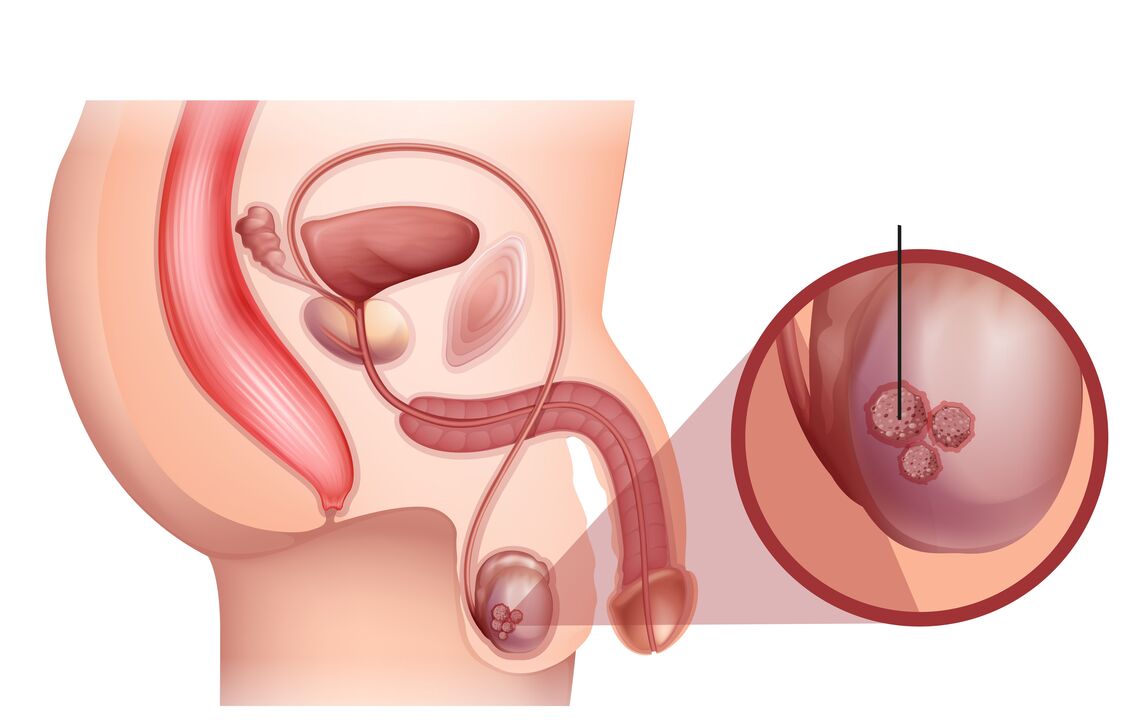
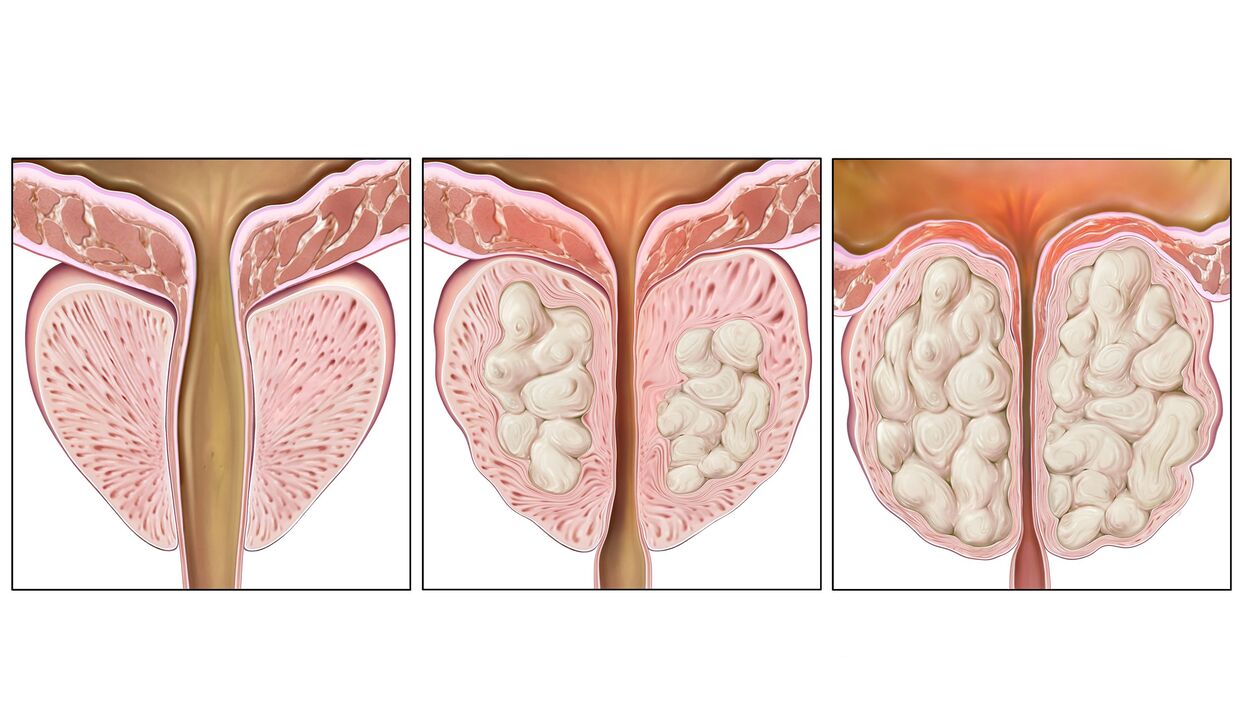
The prostate is a small organ that only men have.Its structure resembles a sponge, it is located under the bladder and seems to surround the urethra.Growth of the gland begins in adolescence under the influence of male sex hormones;in adulthood, its weight can reach 20 grams.It plays an important role in the male reproductive system, creating secretions, one of the components of sperm.But, unfortunately, mature and elderly men often experience gland hyperplasia or malignant organ neoplasms.
How to recognize cancer
As the tumor grows and progresses, the symptoms of prostate cancer depend on the stage of the process.If the disease is still in the first stage or has even reached the second stage, then the tumor is localized in the prostate, has not grown into neighboring tissues and has not metastasized.
Symptoms of prostate cancer in the early stages are practically absent, this is the insidious nature of the disease.The man has no complaints, feels well and sees no reason to go to the doctor.This is why this type of tumor is often detected in an advanced state.An exception may be patients who have previously been diagnosed with benign prostate neoplasms, in which case they are occasionally examined by a specialist doctor and tested for a specific prostate antigen and undergo an ultrasound examination of the prostate.They have every chance of detecting a tumor in the bud itself.But it is worth noting that detecting prostate cancer is not always easy.Even when a biopsy is taken, the results may be clear, but the oncology is already there.This happens because of errors in the method;the needle simply does not reach the site of the localized lesion.If prostate pathology is suspected, especially if it is cancer, it is necessary to perform a fusion biopsy, which combines the possibilities of ultrasound and magnetic resonance in real time, giving the doctor the opportunity to visualize the organ as precisely as possible.
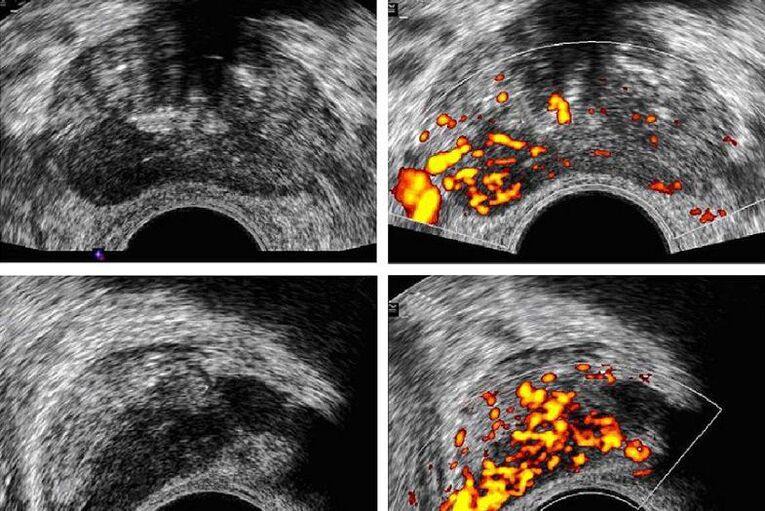
Some symptoms are the result of prostate pathology, while others are caused by mechanical compression and blockage of the urethra.
Given that the bladder must be emptied regularly, if this process is disrupted, it can lead to urine retention, inflammation and the development of a bacterial infection.If measures are not taken, the process will spread, and this already threatens pyelonephritis and kidney problems.
In stage 4, prostate cancer manifests itself even more clearly.Metastases are most often found in the bones, spine and lymph.Because of this, the man's regional lymph nodes increase, his bones hurt, he suddenly loses weight and becomes weak.
Treating prostate cancer is not an easy task, but it can be done.If the local process is detected in time, a complete cure can be achieved, and in more advanced stages, life can be extended.If you notice the symptoms described above, contact a professional clinic for an examination.
Make an appointment, the clinic's doctors have many years of experience in the treatment of urological diseases and achieve success even in the most difficult cases.